
Product Details
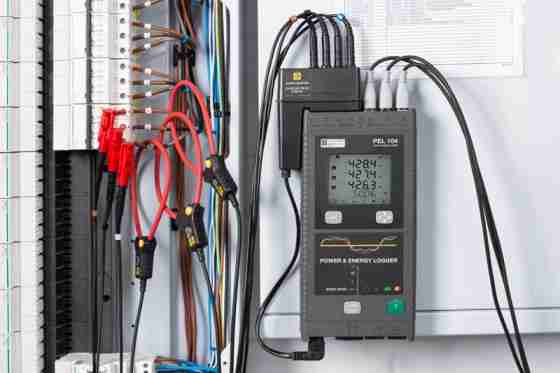
Voltage imbalance study
Sold By :ETC
Delivery duration : * 8 to 10 Days
Quantity:

Buy premium Voltage imbalance study from ZillionsBuyer, your trusted global marketplace for high-quality industrial and commercial products. We supply Voltage imbalance study in Aurangabad, Gurugram, Pune, Bengaluru, Nashik, Lucknow, Mumbai and Vadodara, serving customers across India with reliable quality and competitive prices. Sourced from trusted manufacturers, our Voltage imbalance study is ideal for industrial, commercial, and infrastructure applications. Choose ZillionsBuyer for dependable products, fast delivery, and exceptional customer support tailored to your business needs.
Return Policy:
Thank you for purchasing our products/services. We value your trust and assure you of the best product/services at all times. As our customer, when you are buying our product or service, you agree to our refund policy. Once you have made a purchase on our platform. View details
Voltage Imbalance Study & Analysis
Electrical equipment, especially motors, cannot operate efficiently under unbalanced voltage conditions. Typically, the difference between the maximum and minimum voltages should not exceed 4% of the lowest phase voltage. Higher imbalances can lead to overheating, reduced efficiency, and premature failure of components, particularly motors.
What Causes Voltage Imbalance?
Voltage imbalance in power systems can occur due to several factors:
Single-phase or uneven loads: Large single-phase loads or multiple small loads connected to one phase cause uneven current distribution, resulting in voltage drops.
Switching of heavy three-phase loads: Causes transient surges leading to temporary unbalances.
Unequal system impedances: Differences in impedance across transmission or distribution lines create varying currents in each phase.
Equipment or wiring issues: Bad connections, broken neutral wires, or improper capacitor bank installations contribute to voltage imbalance.
Why is Voltage Imbalance Study Important?
Severe voltage imbalance can have serious consequences for power systems and equipment, including:
Reduced equipment life and increased maintenance costs.
Higher neutral wire currents in 3-phase, 4-wire systems, causing relay malfunctions.
Increased power losses, decreased efficiency, and potential safety hazards.
Accelerated wear and premature failure of motors and other electrical devices.
A voltage imbalance study identifies the causes, evaluates the impact on equipment, and recommends corrective measures for both industrial facilities and distribution systems.
Objectives of Voltage Imbalance Study
Determine the causes and effects of voltage unbalance on distribution systems and user facilities.
Establish accepted standards and definitions for calculating voltage unbalance.
Identify mitigation techniques for both utilities and industrial facilities.
How is Voltage Imbalance Study Conducted?
Voltage imbalance studies involve comprehensive analysis, including simulations, to understand causes, effects, and mitigation strategies. Practical cases are studied, such as:
Broken or poorly connected neutral wires
Operation of motors under unbalanced voltages
Improper capacitor bank installations
Effects on machines, drives, and power electronics
The study helps engineers identify risks, plan system design improvements, and ensure safe operation.
Mitigation Techniques for Facilities
Balancing Loads:
Distribute single-phase loads evenly across three phases.
Reconfigure feeders using manual or automatic switching to reduce unbalance.
Transformer Management:
Ensure proper selection and connection of distribution transformers.
Measure primary and secondary voltages to identify transformer-induced unbalance.
Overload Correction:
Address overload conditions immediately to reduce unbalance and protect equipment.
Unbalance Compensation Devices:
Passive Power Filters: Balance load impedance and phase currents.
Shunt-connected Thyristor-controlled Static VAR Compensators: Adjust reactive power for variable loads.
AC-line and DC-link Reactors: Reduce phase current unbalance in adjustable speed drives (ASD).
Protective Relays:
Introduce negative sequence current relays to safeguard motors.
Relay settings depend on motor horsepower, load, insulation class, and service factor.
Benefits of Voltage Imbalance Study
Reduces equipment failures and downtime.
Enhances system efficiency and reliability.
Extends the life of motors, transformers, and other electrical equipment.
Ensures compliance with standards and operational safety.
Provides actionable recommendations for system design, operation, and maintenance.
By identifying and mitigating voltage imbalance, facilities can improve equipment performance, reduce energy losses, and maintain a safe and reliable electrical system.
